My Learning Archive

Explore key concepts in electronics with visual summaries


Under Constructon, it is for my future understanding and one of my friend like to learn Control System

Small Signal Analysis of BJT

This section might summarizes the small signal analysis of a Bipolar Junction Transistor (BJT) with H-parameter model, Check this book for more knowledge and equations.


This is the circuit diagram of Common Collector: Small Signal Analysis of BJT
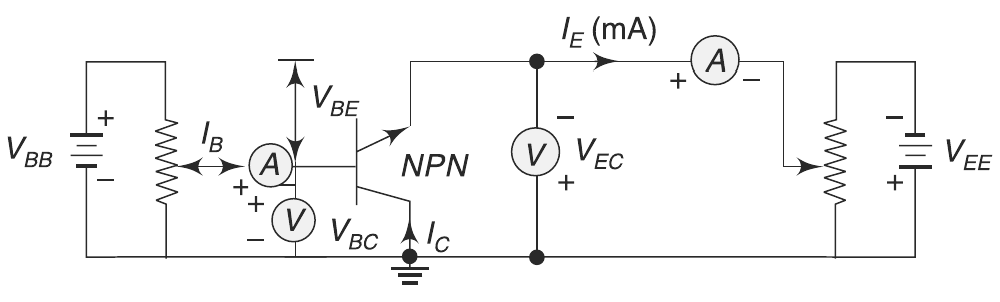


This is the circuit diagram of Common Emmiter: Small Signal Analysis of BJT
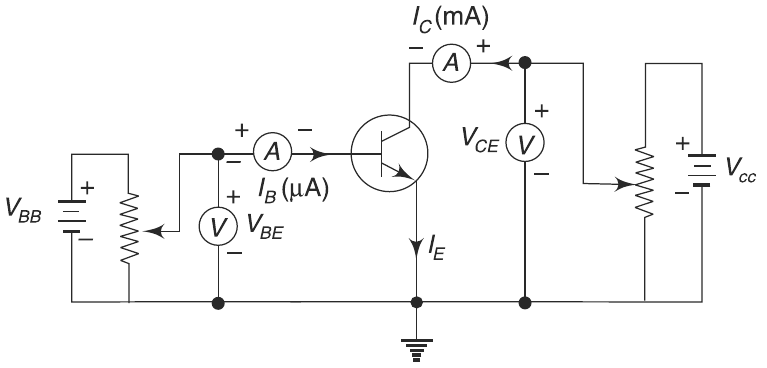
So the H-Parameter model and its Gain and Impedence are :
Current Gain \(A_i\) = - \(\frac{I_c}{I_b}\)
Voltage Gain \(A_v\) = - \(\frac{A_i * R_l}{Z_i}\)
Input Impedence \(Z_i\) = \(H_ie\) - \(\frac{H_re*H_fe*R_l}{1+H_oe*R_l}\)
Output Impedence \(Z_o\) = \(R_l\)


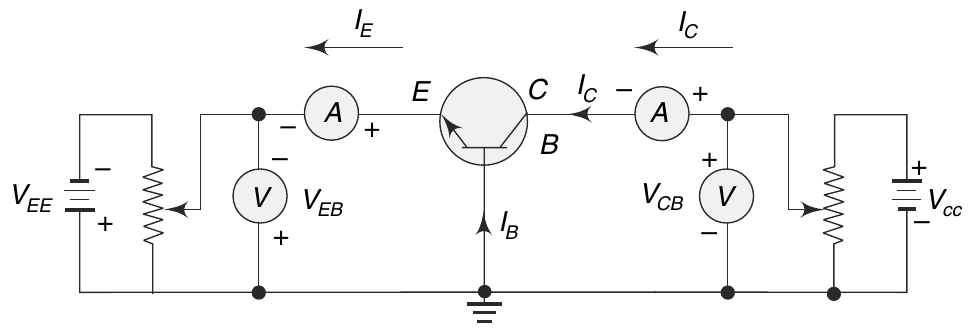
This is the circuit diagram of Common Base: Small Signal Analysis of BJT
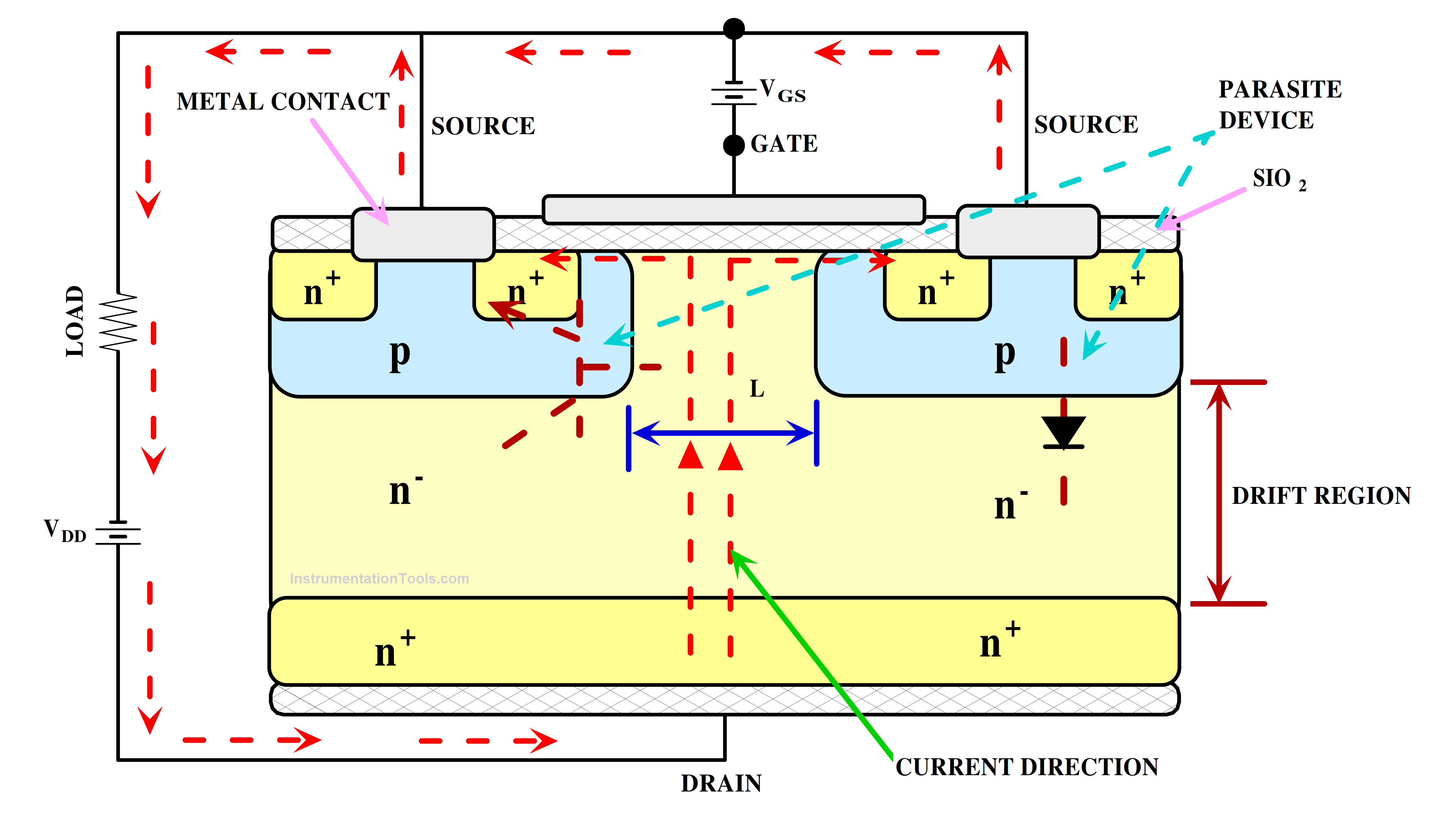
Characteristic Model of MOSFET

Characteristic model of Metal-Oxide-Semiconductor Field-Effect Transistor (MOSFET), \[ h_{ib} = \frac{\partial V_{EB}}{\partial I_E} \]

Characteristic Model of MOSFET

Basics of Control System

Lets consider a example :

Here we know a mechanical system that is damped (bx) and Spring (k) with distance or displacement (x) with Force (F).
The modeling equation of this system is
\[ M \frac{d^2x}{dt^2} + b \frac{dx}{dt} + kx = F \]
Taking the Laplace transform \[ Ms^2X(s) + bsX(s) + kX(s) = F(s) \]
Now the transfer function between the displacement \(X(s)\) and the input \(F(s)\):
\[ \frac{X(s)}{F(s)} = \frac{1}{Ms^2 + bs + k} \]